Arrogation and appropriation

"Because I Said So" – the long history of polite coercion

That fine, silken cloak draped over the naked emperor of power, carefully stitched with phrases like “you ought to”, “you must”, or the always-a-red-flag “we are required to”. One might almost think these words were woven by bureaucrats with a thesaurus in one hand and a sledgehammer in the other. At its core, legitimate power is the quiet agreement that some people get to tell others what to do, not because they’re better, brighter, or morally upright, but because we’ve all tacitly accepted a hierarchy that says, “Yes, you get the chair at the head of the table… and I’ll just sit over here by the bin, cheers.” ...

October 12, 2020 · 4 min

Left hemisphere dominance: A love letter to bureaucratic hell

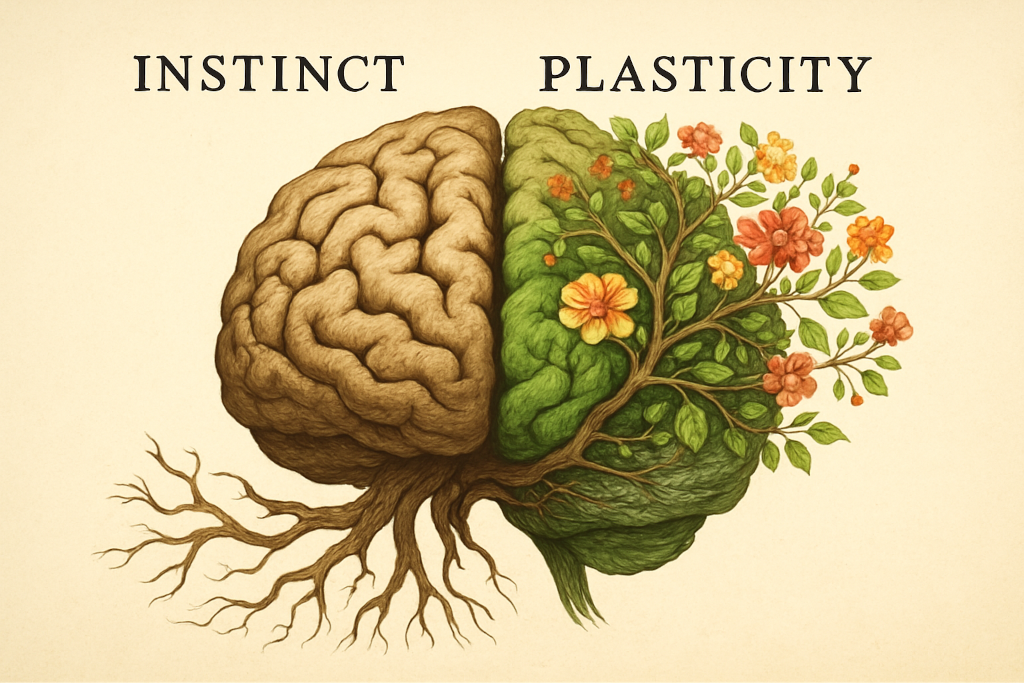
We’ve got two brain hemispheres, structurally asymmetrical. The left one? Brilliant at building bridges, splitting atoms, counting beans. It’s been instrumental in all that humankind has achieved. Unfortunately, it’s also a terrible driver of the human experience. A wonderful servant, yes, but an appalling master. The right hemisphere, though not dependent on the left in the same way, needs it to achieve its full potential, to be its wild, flowing, metaphor-loving self. But the left? Oh no, it pretends it doesn’t need the right at all. Denial, thy name is cortex. ...

October 1, 2020 · 10 min

Governmental ghost stories

In Governmental Ghost Stories, the chills don’t come from creaking doors or sudden screams, but from the slow, clammy realisation that your digital life has more uninvited guests than a haunted manor on All Hallows’ Eve. It’s less The Conjuring and more Yes, Minister meets Dr. Strangelove in a dimly lit GCHQ break room. The UK Investigatory Powers Act (IPA): Or, How I learned to stop worrying and love the snooper’s charter ...

February 16, 2020 · 4 min
Space junk

Earth’s orbit: Humanity’s junkyard with a view

Space, the final frontier, the great beyond, the… shockingly cluttered dumping ground for humanity’s discarded space toys. Forget the romantic image of a pristine cosmic void; what we’ve actually created is a high-altitude landfill, where decades of forgotten satellites, exploded rocket stages, and even rogue flecks of paint whiz around at speeds that could turn a pebble into a shotgun blast. Back in the glory days of the Cold War, the US and the Soviet Union treated space like a shooting range, gleefully blowing up satellites just to prove they could. And why not? It’s not like anyone would have to clean up the mess, except, well, everyone launching anything into orbit for the next few centuries. Fast forward to today, and we’ve got everything from frozen clouds of rocket pee (yes, really) to shards of shrapnel zipping around up there, turning what could be a celestial highway into a demolition derby. ...

December 4, 2019 · 3 min

A metadata murder mystery, without the mystery

Once upon a FOIA, a group of researchers got their hands on 2,000 pages of bureaucratic bedtime reading from Serbia’s data protection overseers. Their aim? To expose the country’s surveillance architecture. Spoiler: it’s less Big Brother, more “nosy landlord with a master key to every flat”. Here’s what they found: Metadata mania: Every call, text, and pixel of mobile data generates metadata – and Serbia’s telcos are required to store it all for 12 months. That’s every call you’ve made, every base station you’ve connected to, and even what phone model you’re using (yes, they know your burner’s a Nokia 3310). Who’s watching?: The police, civil spies, military spies – all lining up at the metadata buffet. Some go through official channels (paperwork, court orders), while others are gifted magical software logins with unlimited access to the nation’s digital exhaust pipe. Who needs due process when you’ve got root access? Slightly illegal hobbies: In a fun twist, one carrier just hands over everyone’s metadata to the intelligence agency daily. Another gave the same spooks a direct line into their data centre. Both activities have the same legal standing as Monopoly money – i.e., none – and violate both Serbian and international law. And what is law if no one enforces it? Wiretapping 2.0: Classic phone tapping’s had a glow-up. Now it’s called “interception of electronic communications” and comes with a healthy dose of legalese and plausible deniability. Telcos are even required by law to buy spy gear and hand it to the intelligence agency. Then they get to pay for the maintenance, too. Talk about state-sponsored gaslighting. Geo-stalking as a service: Thanks to cell towers and triangulation, your phone’s location can be pinpointed in real-time. This info is happily made available to state organs, complete with bespoke tracking devices and BIA’s sole discretion. If you thought you were off-grid, surprise – you’re on three grids at once. Conclusion In Serbia, surveillance isn’t just a tool – it’s an entire shadow industry, built into the very bones of mobile infrastructure. The lines between legal oversight and unchecked spying are not so much blurred as enthusiastically redacted. And while mass surveillance is technically illegal, all the loopholes are working overtime. ...

November 1, 2019 · 2 min

Data flow: Or, how your clicks go on holiday without you

You might think the internet is a swirling cloud of decentralised freedom. Bless. In reality, it’s a tangled mess of invisible choke points, centralised bottlenecks, and nosy gatekeepers. The SHARE Foundation decided to trace where data from Serbia actually goes, and surprise! It’s not very far before it ends up in the hands of a small handful of companies, countries, and, let’s be honest, potential eavesdroppers. One router to rule them all Start with a simple web visit. Your request doesn’t just zip off to its destination, it checks in at the SBB TelePark in Belgrade, where all local traffic passes through a single router. That’s right. If you wanted to spy on everything Serbians do online (purely theoretically, of course), you’d only need to sit at one choke point. And funnily enough, ISPs are legally obliged to do just that. Because what’s a little metadata hoarding between friends? ...

November 1, 2019 · 3 min

How political warfare got weird on the Internet

Once upon a time, the internet was supposed to be a free, democratic utopia. Instead, it’s become a glorified panopticon run by Silicon Valley landlords where everyone’s shouting, no one’s listening, and half the “people” aren’t even real. Twitter: Where trolls go to war Serbian elections on Twitter looked less like democratic discourse and more like a pub brawl between colour-coded tribes. Add a few trolls, some anonymous hitmen-for-hashtags, and voila, you’ve got state-sanctioned smear campaigns wearing sock puppet accounts. ...

September 26, 2019 · 2 min

TL;DR: Snow, trolls & digital control freaks

Welcome to Serbia’s digital political theatre, where every heroic rescue is staged, every dissenting meme vanishes mysteriously, and every comment section is a gladiator arena for astroturfed loyalists. It starts with a snowstorm, a suspiciously well-timed TV crew, and a future prime minister trying out for the role of Balkan Superman. The internet responds with mockery. The government responds with takedowns. Thus begins the SHARE Foundation’s journey documenting over 300 cases of digital shenanigans, think DDoS attacks, creepy surveillance, and disappearing videos, courtesy of state-sanctioned (or suspiciously adjacent) actors. ...

September 26, 2019 · 2 min

Brain sex differences: A masterclass in over-interpretation

The eternal quest to prove that men are from Mars and women are from Venus, neurologically speaking, of course. For over a century, scientists (and, let’s be honest, people with opinions) have been poking at brains, measuring corpus callosums, and squinting at amygdalae, all in the noble pursuit of confirming whatever gender stereotypes they already believed. Take the corpus callosum, that thick bundle of nerves connecting the brain’s hemispheres. Back in 1906, R. B. Bean, a man who clearly never met a bias he didn’t like, declared that its size correlated with intelligence and, naturally, that women (and certain races, because why stop at one bad take?) had inferior versions. His own lab director promptly debunked him, but the myth persisted. By the 1990s, pop science had rebranded the idea: Women have bigger corpus callosums! That’s why they’re so ~intuitive~! Cue a thousand think-pieces about “female intuition.” ...

September 23, 2019 · 2 min

Planned obsolescence: The art of selling you crap

Planned obsolescence, the tidy art of selling people the same product more than once. Why sell someone a product that lasts when you can sell them the same product repeatedly? It started in the 1920s, when a group of German industrialists, presumably while twirling their moustaches, formed the Phoebus cartel and decided light bulbs were too reliable. From then on, bulbs would dutifully expire after 1,000 hours, like clockwork. And thus, the great tradition of engineering things to fail was born. ...

August 29, 2019 · 3 min