The naming and the finding out

At eight in the evening on 31 August 1939, a small team in Polish uniforms seized a radio transmitter at Gleiwitz in Upper Silesia and broadcast a few minutes of anti-German agitation. By the following morning the event had a name, an author, and a consequence: a Polish provocation, answered by the invasion that began the Second World War in Europe. The name held for six years. The finding out took until December 1945, when the sworn affidavit of the SS officer who ran the operation was read into the record at Nuremberg, complete with the code name for the murdered prisoner left at the scene. ...

July 8, 2026 · 23 min

Reading the envelope

Reading the Substrate argued that analysis of conflict tends to read a story first and the ground beneath it late, and that the ordering is often backwards in its emphasis: ideas set a conflict’s direction, conditions set its reach. That was a claim using looking backwards, about explaining wars that have already happened. A fair question is whether the same method survives being turned around to face forward. If conditions set reach, can a reading of conditions say anything useful about what comes next? ...

July 1, 2026 · 9 min
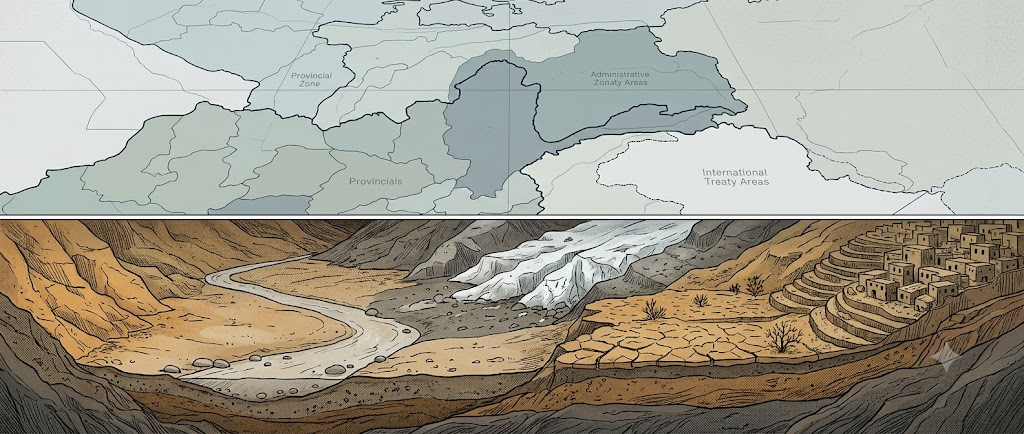
A stylised map of a contested border region shown above a cutaway cross-section of the ground beneath it. The upper map shows clean diplomatic borders and labels; the lower section reveals a dry riverbed, a retreating glacier, cracked farmland, and a crowded hillside, with a thin line dividing the two layers.

Reading the substrate

By the time a clash in the central Sahel reaches a wire service, it has already been given its name: a jihadist attack, or ethnic violence between Fulani herders and settled farmers, with the dead counted under one heading or the other. What rarely travels with the dispatch is the thing underneath it: a rainy season that arrived late or not at all, a grazing corridor quietly ploughed under for cropland, a herd pushed a hundred kilometres further south than the route it followed a decade ago, into country that was never its own. The label arrives first. The condition that produced it, if it arrives at all, arrives as background colour. Between the two sits a gap, and what falls into it. ...

June 30, 2026 · 22 min