The phrase survived. The definition did not.
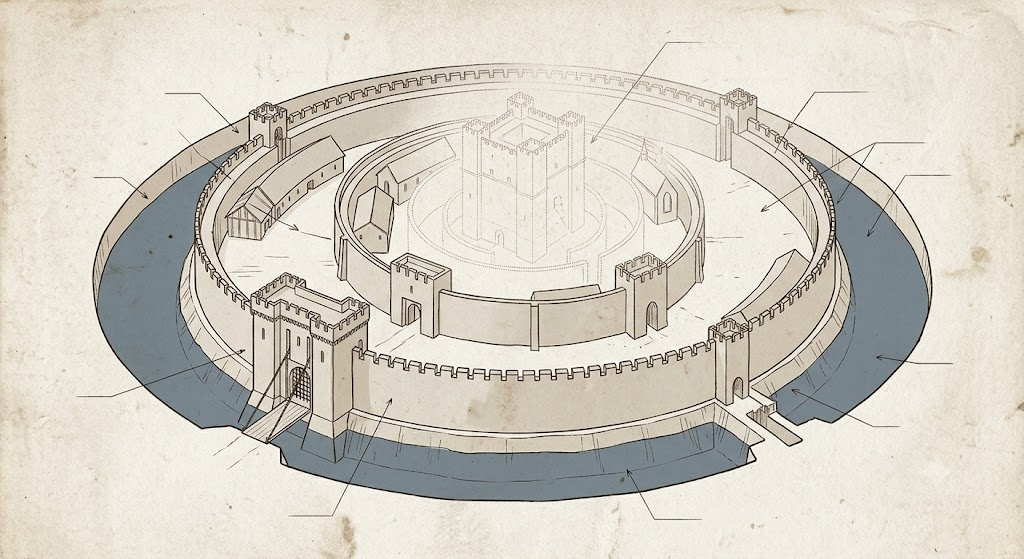
Consider a medieval castle. It is tempting to imagine that its security rested on the thickness of its walls, and that a besieging army faced essentially one problem, repeated: get past the stone. But that is not how a defended position worked, and the people who built them knew it. A castle was arranged so that every successful advance exposed the attacker to a new disadvantage. The moat forced engineering work under fire. The wall forced escalade or breach, both slow, both loud, both costly in men. The gatehouse compressed the attackers into a killing corridor where their numbers stopped helping them. The courtyard beyond it was overlooked from every side, so that taking the gate meant standing in the open beneath defenders who had been waiting for exactly this. And the inner keep meant that even total success outside its walls bought the attacker another siege, on worse ground, with a depleted force. ...