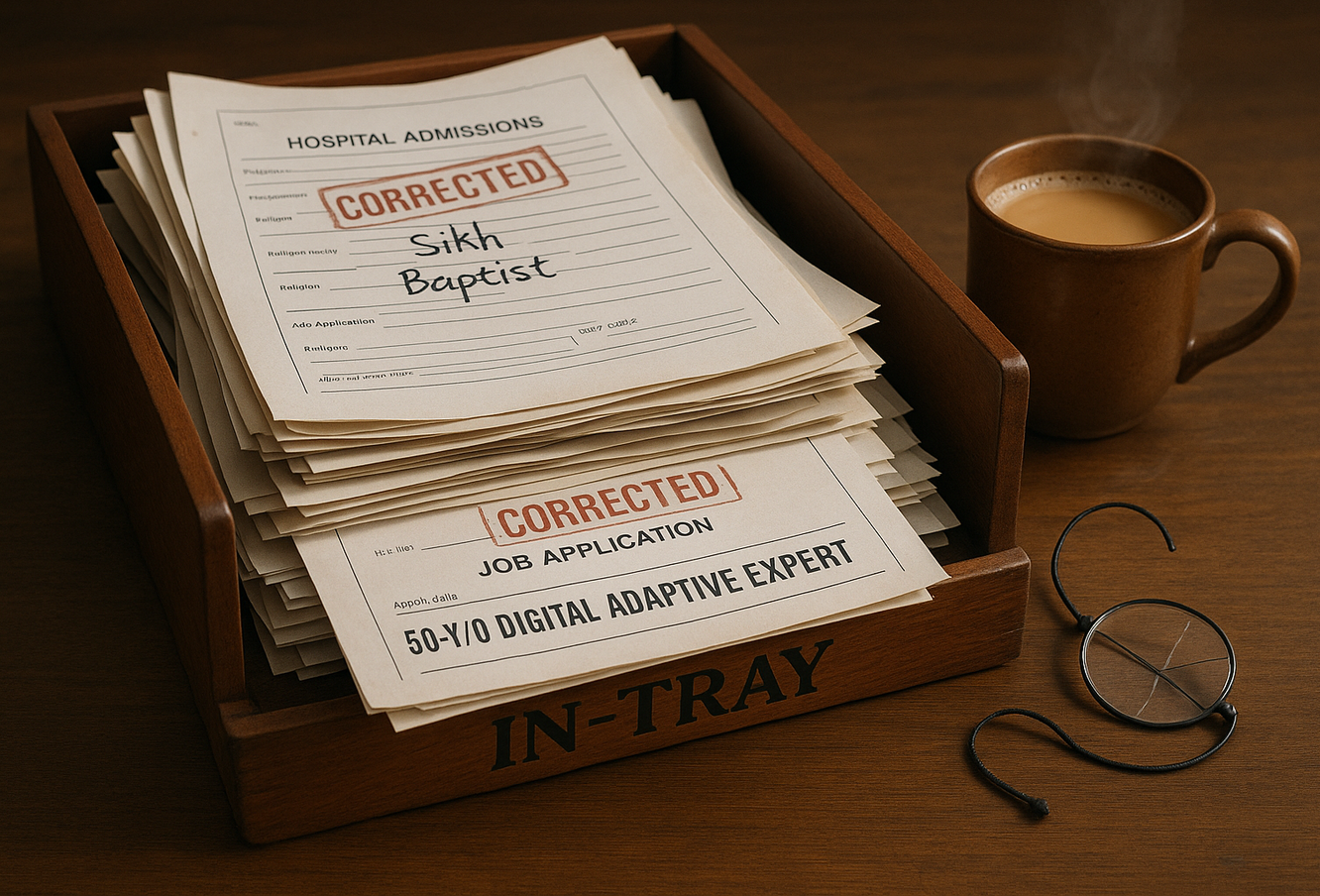
The tyranny of tidy boxes: how master/slave binaries bodge human society
We humans adore a simple dichotomy. It’s frightfully efficient. White or non-white. Male or female. Disabled or abled. These binaries promise neatness in a messy world, a cognitive filing system for complex humanity. Yet as philosopher Val Plumwood observed, these “master/slave” frameworks operate through five dangerously slick mechanisms: backgrounding, radical exclusion, incorporation, instrumentalism, and homogenisation. The result? A society perpetually queueing at the wrong post office counter. The five quiet engines of oppression Plumwood’s mechanisms work like bureaucratic stealth. Backgrounding treats one identity as society’s default setting, the unmarked “normal” against which others are measured. Consider how medical textbooks historically used white male bodies as universal templates. Radical exclusion rigidly polices borders: trans folk facing scrutiny over toilet access, or mixed-race individuals pressured to “pick a side”. Incorporation defines the “slave” category purely by its relationship to the master (“disabled” meaning “needs help”). Instrumentalism reduces people to tools, like expecting minority staff to fix diversity problems unpaid. Homogenisation flattens groups: assuming all disabled people need identical ramps. ...