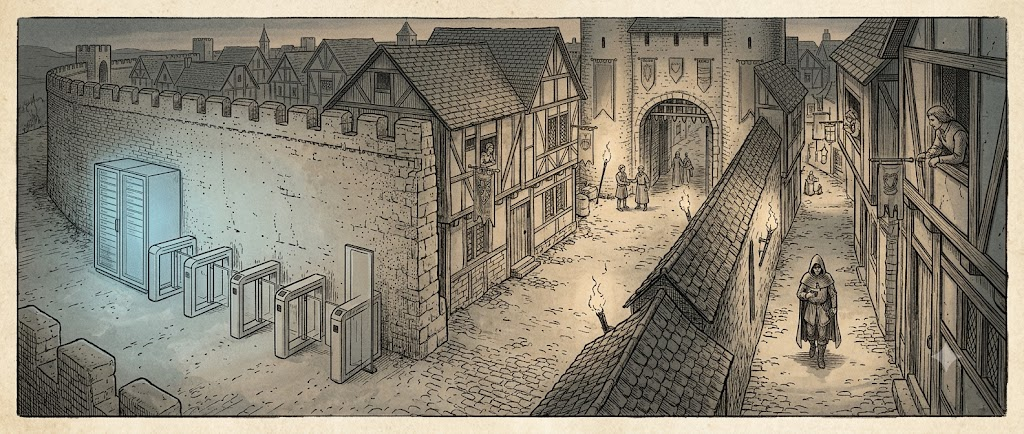
A walled medieval city at dusk seen from slightly above, gates standing open, lantern-lit lanes, guild banners hanging from timbered houses, small figures greeting one another at the gate and leaning from windows to watch a lone stranger in the lane. One long section of the city wall has been replaced by an incongruous row of sleek modern turnstiles and a faint blue-glowing server cabinet.

The trouble with calling it zero trust

A medieval city was never secured by its wall alone. It had guilds that vouched for their members, letters of introduction carried from town to town, gate guards who knew faces, innkeepers who noticed accents, and neighbours who registered a stranger in the lane before any official did. The wall was one instrument among many, and arguably not the most effective one. What kept the city safe was a dense weave of overlapping trust relationships, most of them informal, all of them cheap (in financial terms). ...
July 20, 2026 · 11 min

Mapping trust

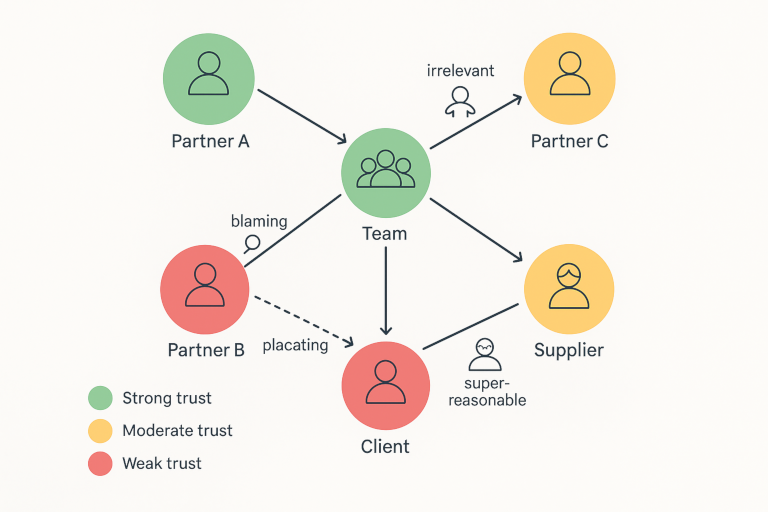
Organisations invest heavily in procedures, certifications, and standards. Yet whether those investments deliver results depends on something far less tangible: human relationships. As organisations become more distributed and interdependent, seeing and strengthening these connections becomes critical to resilience. The hidden architecture of trust Without trust, perfectly drafted policies and shiny certificates become little more than beautifully formatted PDFs. In networks where multiple organisations or teams rely on each other to deliver quality services, trust determines whether processes work in practice or collapse under miscommunication. ...

October 30, 2025 · 4 min