How security failures learned to sound reasonable

The most useful phrases in a modern security programme are the ones that cannot be argued with. “The platform gives us coverage.”, “We have visibility.”, “The tool supports MFA.” Each one is calm, professional, and technically defensible. Each one can also be doing something quietly different from what the room hears. How the grammar works Three small grammatical moves do most of the heavy lifting. The first is capability standing in for implementation: “The platform supports MFA”, “Defender has ransomware protection”, “Our firewall can do segmentation”. ...

May 3, 2026 · 5 min
A boardroom with no walls, floating in calm white space. Six figures in identical grey suits sit around a long polished table, each with a smooth mirrored orb where their head should be, nodding politely at a single document hovering above the table

How some ideas outlast their own evidence

Across many mature organisations, the same phrases seem to keep coming back, like “Aligned with best practice”, “The control is in place”, and “We followed the framework”. They survive failure. They survive scandal. They survive the people who used them last time. The question worth asking is perhaps not whether they are accurate, but why they are so robust. The usual explanations cover bureaucratic inertia, regulatory capture, and the well-documented limits of organisational learning. These are real, but they are not the most interesting part. The more interesting possibility is that these phrases are doing useful work. Just not the work they appear to be doing. ...

May 3, 2026 · 6 min

Mapping trust

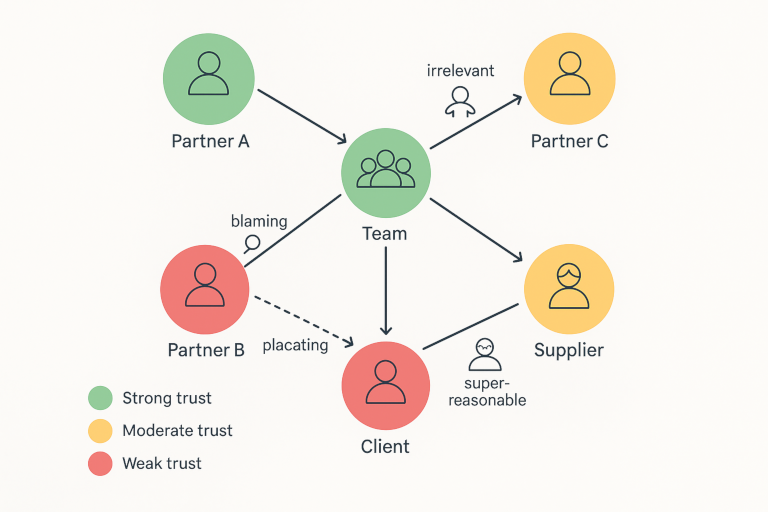
Organisations invest heavily in procedures, certifications, and standards. Yet whether those investments deliver results depends on something far less tangible: human relationships. As organisations become more distributed and interdependent, seeing and strengthening these connections becomes critical to resilience. The hidden architecture of trust Without trust, perfectly drafted policies and shiny certificates become little more than beautifully formatted PDFs. In networks where multiple organisations or teams rely on each other to deliver quality services, trust determines whether processes work in practice or collapse under miscommunication. ...

October 30, 2025 · 4 min

The relational firewall

A developer pushes a feature. Security flags a missing TLS configuration. Operations scrambles to patch the database. Alerts multiply while emails ping insistently and no one knows who owns what. Technical pipelines are fine. The human side stutters. Miscommunication, conflicting priorities, and unspoken assumptions slow down response and occasionally create a small drama worthy of a sitcom. DevOps, Security, and Ops can be aligned by noticing patterns in how teams interact under stress, practising adaptive responses, and embedding relational awareness into everyday workflows. The goal is operational harmony without the motivational poster clichés or mandatory soft-skills seminars. ...

October 21, 2025 · 4 min

Muscle memory for incident stress

Introduction A SOC alert does not knock politely. It arrives like a crowd of people shouting different instructions in a language only half understood. One alert maybe says “ransomware detected,” another could flag “unusual login,” and the logs you trust most are blank. Analysts glance at dashboards, shrug, and whisper to each other over Teams while the CISO insists on updates every five minutes. Virginia Satir’s work gives us a lens for understanding this chaos. She mapped how people respond to stress, communicate under pressure, and shape collective outcomes. Her stances, emotional congruence, and relational awareness offer a way to train teams not just to follow procedures, but to survive pressure without fracturing. ...

October 21, 2025 · 4 min

The audit as x-ray

There is a certain bleak poetry in a security audit. The word audit evokes clipboards, compliance spreadsheets, and the faint smell of burnt patience. But beneath the bureaucracy lies something far more interesting: an act of seeing. A real audit, not compliance theatre, but the kind that leaves everyone quietly re-evaluating their life choices, is less about ticking boxes than about mapping the hidden currents that actually keep an organisation secure. Which is why it belongs not in the company of frameworks, but in the orbit of Virginia Satir, Eyal Weizman, and Trevor Paglen. ...

October 20, 2025 · 6 min
Satir Change Model

How to survive your first incident response

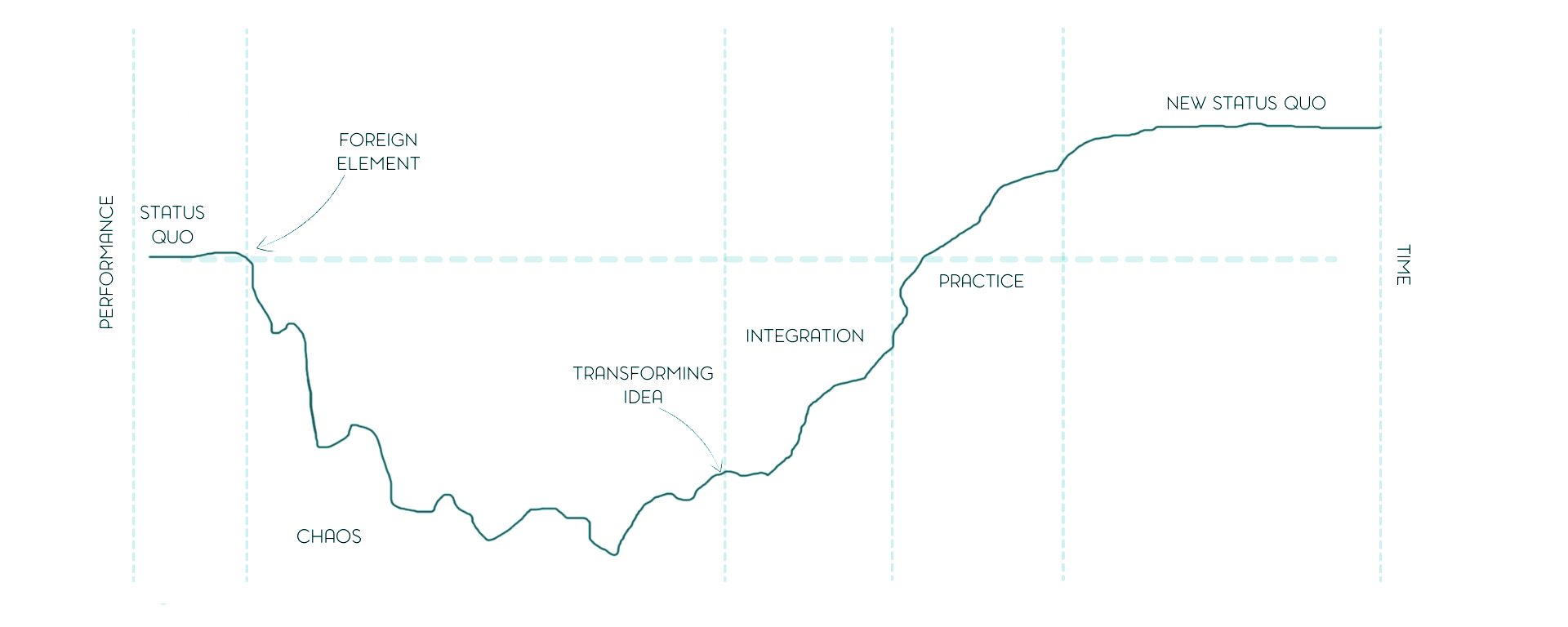
If you have ever tried to set up a Security Incident Response Team (SIRT) function in a small organisation, you will know that it is not about security, incidents, or even teams. It is about humans behaving badly under stress. Enter the Satir Change Model, a tool from family therapy that has no right working in cybersecurity, and yet works better than most “cyber resilience frameworks”. Her five-stage model maps beautifully onto what happens when a small organisation suddenly decides to “get serious about incident response”. Building a SIRT is not about defeating chaos; it is about becoming fluent in it. And once you have done that, “It cannot get any worse” stops being a threat and starts being the team motto making people laugh, sending extra oxygen to their brain. ...

October 16, 2025 · 6 min